How do you write minutes for board and committee meetings in the Gulf?
Good minutes record who attended and whether there was a quorum, the resolutions passed and how members voted, the directions given to management, and the date of the next meeting. Write them in clear formal language, in Arabic, English or both as your company requires, then circulate a draft promptly and have it approved and signed.

What minutes are for
Minutes are the official record of what a board or committee decided. Auditors, regulators, future board members and sometimes courts may read them. They are not a transcript: nobody needs every sentence, but everyone needs to see clearly what was decided, by whom, and on what basis.
The parts of good minutes
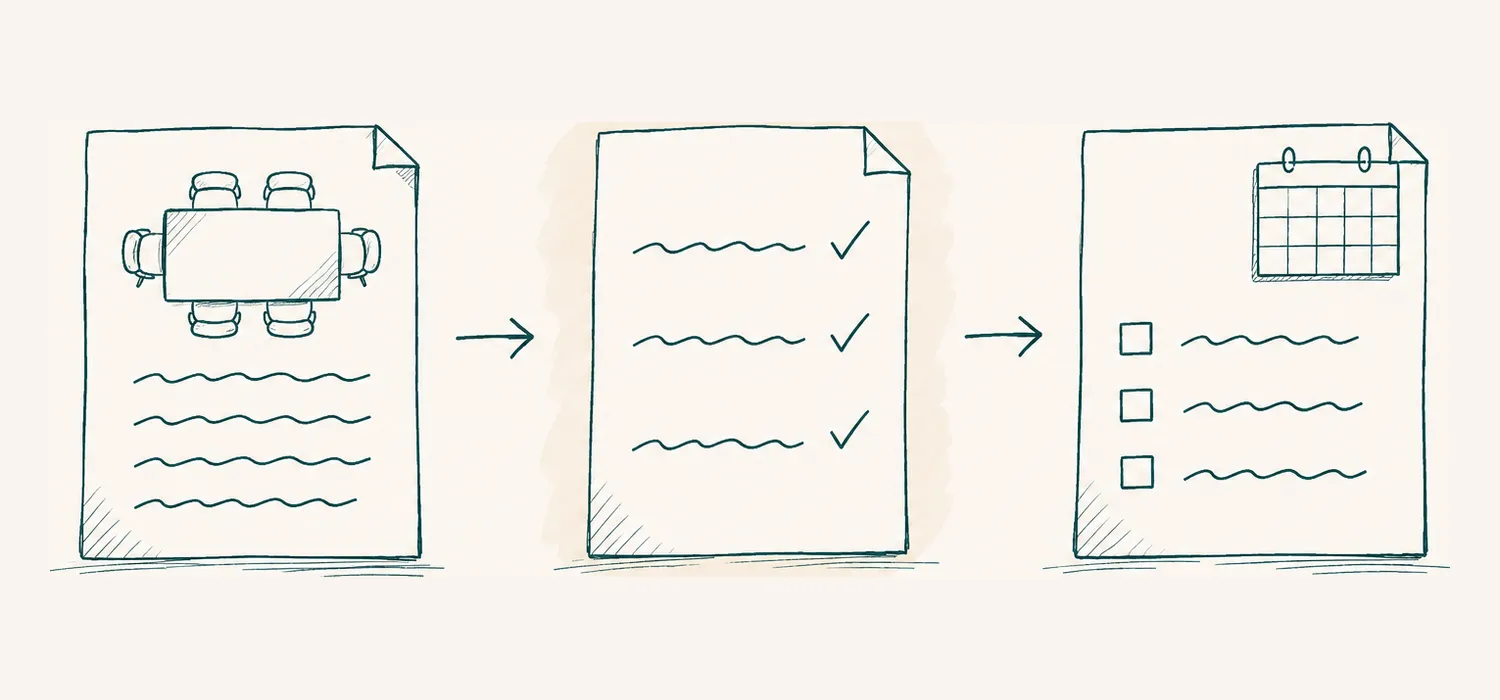
- Attendance and quorum
- Resolutions and votes
- Directions and deadlines
- Meeting details: the company, the board or committee, the meeting number, date, time and place, or that it was held online.
- Attendance and quorum: members present, apologies, invited guests, and a statement that the quorum was met.
- Conflicts of interest: any declared, and how they were handled.
- Resolutions and votes: the exact wording of each resolution and how members voted, including any abstentions or objections.
- Directions to management: each one with an owner and a date.
- Next meeting: the date, if set.
- Signatures: space for the chair and the secretary.
Committee minutes follow the same pattern. An investment committee records each deal discussed, the decision and any conditions; an audit or risk committee records its findings and its recommendations to the board.
Arabic, English or both
Some companies keep their official minutes in Arabic, some in English, and some in both. Follow your company’s articles and your regulator. Whatever the language, write in clear formal style: the meeting may happen in Gulf dialect or switch into English, but the minutes should read as one consistent document. Keep financial terms, names and numbers exactly as stated, and if you keep two versions, say which one prevails. For capturing a meeting that moves between languages, see how to take meeting notes in Arabic and English.
From the meeting to approved minutes
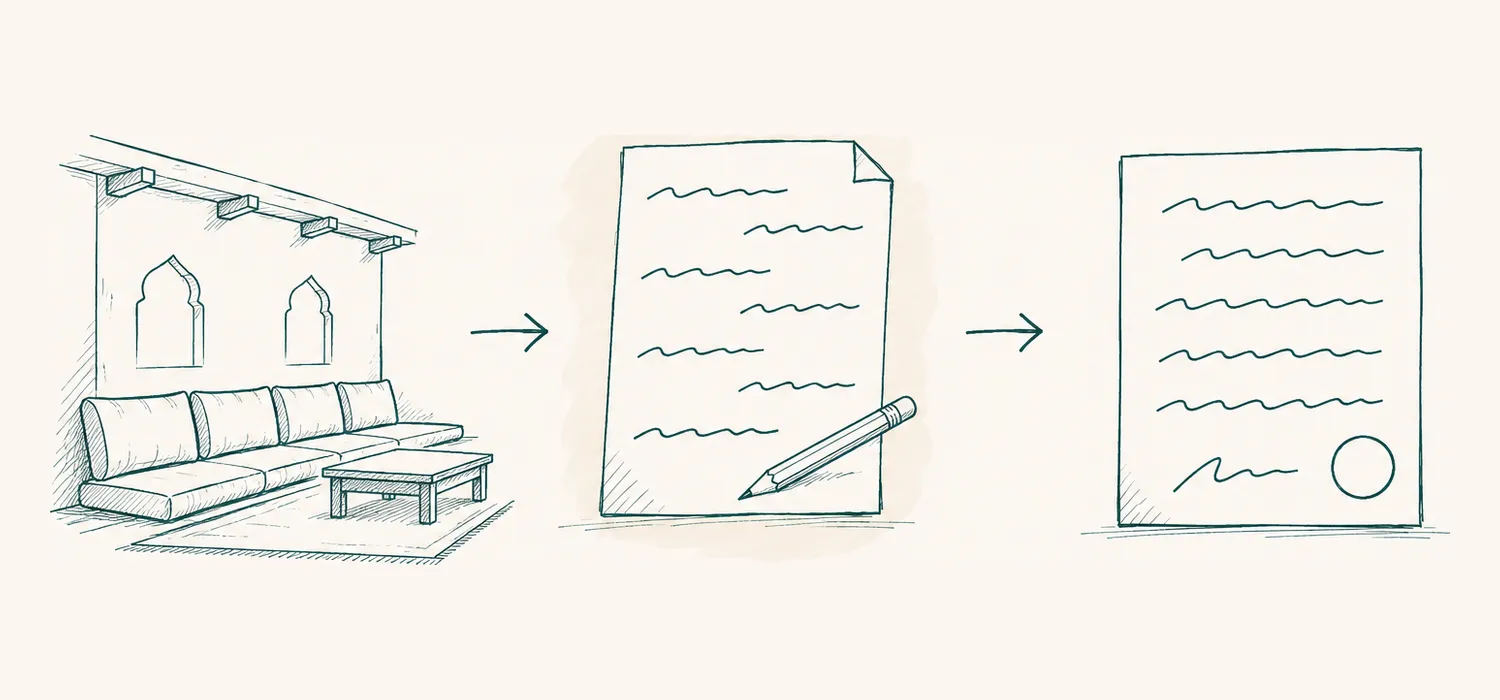
- The meeting
- The draft
- Approved and signed
- Before the meeting, prepare a skeleton from the agenda, with a heading for each item.
- During the meeting, record each resolution and vote exactly, and note when it happened. If you record the meeting, check whether your notes tool is safe for confidential meetings.
- Write the draft while the meeting is still fresh, ideally within a few days.
- Send the draft to the chair, and to members if that is your practice, for corrections.
- Approve the minutes at the next meeting, sign them and file them.
Common mistakes
- Writing a transcript instead of a record of decisions.
- Directions without an owner or a date.
- Forgetting to record the quorum.
- Numbers that differ from the papers the board was given.
- Letting the draft wait until nobody remembers the details.
How Majlis helps
Majlis has note templates made for boards and committees, including board meetings, investment committees, audit, and risk and compliance. The board template is laid out as attendance and quorum, resolutions and votes, directions to management, and the next meeting. Majlis transcribes Arabic and English together, writes the notes in formal Arabic or in English, and lets you download them as a Word document or a PDF to finish as your official minutes.
Join the Majlis waitlist to download it for Mac or Windows, or see how Majlis works.
Questions
What should board minutes include?
The meeting details, who attended and whether there was a quorum, any declared conflicts of interest, the resolutions and votes, the directions given to management with owners and dates, and the next meeting. Check your company’s articles and your regulator for anything more they require.
Should minutes record who said what?
Usually not word for word. Minutes are a record of decisions and the main reasons for them. Record individual views when a member asks for their position to be noted, or when a vote is not unanimous.
Can minutes be kept in both Arabic and English?
Yes, some companies keep minutes in both languages. Decide in advance which language is the official version if the two ever differ.
Who approves the minutes?
Typically the board or committee approves the draft at its next meeting, and the chair and the secretary sign it. Follow your company’s own rules.